

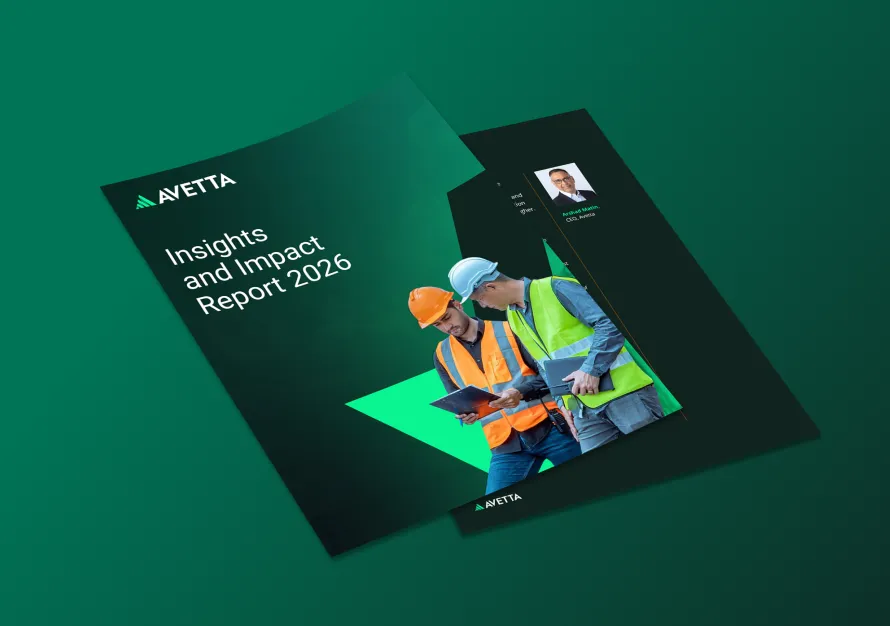
CHICAGO – May 19, 2026 – Avetta®, the leader in intelligent work readiness across global supply chains, today released the Avetta Insights and Impact Report 2026 at its North America Summit Series event taking place in Chicago May 19-21. The report offers new analysis on how organizations are improving safety outcomes across increasingly complex global operations. Chiefly, it shows that while foundational supply chain risk management capabilities and improved visibility both contribute to fewer serious health and safety incidents, the most significant improvements—up to 97% lower workplace fatality rates—occur when these capabilities are implemented together as part of a coordinated strategy.
“Supply chains have become increasingly distributed and unpredictable, forcing organizations to navigate risk faster than ever before,” said Arshad Matin, CEO at Avetta. “Our 2026 report confirms that health and safety performance doesn't improve by simply adding individual programs in a vacuum. The organizations seeing the most dramatic results—and building safer, more resilient operations—are those that shift from a siloed approach to a connected, strategic system. They aren’t just managing compliance—they’re cultivating a state of readiness.”
To support more consistent analysis of serious health and safety outcomes across regions, this year’s report also introduces the global severe injury rate (GSIR), a normalized measure designed to address differences in how severe injuries are defined and reported worldwide. GSIR provides additional context alongside fatality rate and serves as a transitional calculation as the industry moves toward more standardized reporting.
That shift is underway with the recent release of ASTM E2920-26, a new global standard for recording and benchmarking priority occupational health and safety-related incidents. Spearheaded by the National Safety Council (NSC), Avetta is a key participant in the standard’s development and maintenance and has begun incorporating the framework into its platform to support broader adoption over time.
“Truly safe organizations must embrace innovative solutions and embed safety in workplace culture for employees at every level and across international borders,” said Lorraine Martin, CEO at NSC. “As organizations work toward proactive risk mitigation and hazard control, studies like the Avetta Insights and Impact Report and voluntary consensus standards like ASTM E2920-26 are helping pave the way in translating insights into more effective action.”
The report provides the following key takeaways based on three years (2022-2024) of GSIR and fatality rate data:
- Foundation matters: Organizations that implement core health and safety risk management capabilities—such as prequalification, safety audits, insurance verification, worker management and worksite controls—see significantly lower GSIR and fatality rates. In some cases, individual capabilities are associated with average lower GSIR of 18% (prequalification) and lower fatality rates of 69% (worksite controls), reinforcing that a strong health and safety foundation is essential to protecting workers and maintaining operational readiness.
- Visibility matters: Broader supply chain risk visibility into sustainability, business and cyber risks relates to safety maturity because it surfaces exposures that often sit outside traditional health and safety functions. For example, organizations that implemented and continued to improve their sustainability risk visibility saw on average 25% less severe incidents and 54% less fatalities.
- Strategy matters: The greatest impact does not come from adding these capabilities in isolation—it comes from how they work together intelligently. Organizations that take a strategic, systems-based approach—integrating capabilities over time—see the strongest results: a 39% average better GSIR and 97% average better fatality rates. Each capability builds on the last, increasing visibility, strengthening controls and reducing risk more effectively.
Additionally, the report highlights the growing role of AI in helping organizations operationalize the capabilities outlined in these key findings. When grounded in a trusted system, AI enhances visibility by identifying patterns across risk signals and supports more coordinated, strategic action across operations. In this context, AI moves beyond a productivity tool to become a readiness engine, enabling organizations to act on insights with confidence, scale decision-making and maintain visibility that is explainable, auditable and tied to real-world execution.
“What stands out in the data is that meaningful improvements in health and safety performance aren’t driven by individual actions, but by how organizations build and operationalize their overall approach to supply chain risk management,” Matin concluded. “A strong foundation creates consistency, greater visibility brings clarity and a coordinated strategy ensures those elements work together so work can move forward safely, predictably and confidently. When AI is introduced into a system like that, it acts as a force multiplier, turning insight into action at scale.”
To learn more about Avetta, visit www.avetta.com.
About Avetta
Avetta is building the largest global community of hiring clients and suppliers that are Ready to Work. Its unified platform streamlines compliance, prequalification, safety and performance benchmarking in a single, integrated experience. Trusted by 360,000 businesses across more than 120 countries, Avetta blends AI-driven insights and human expertise to close risk gaps and strengthen supplier reliability so projects start on time, risks are managed proactively and operations scale with certainty.
Media Contact
Aaron Searle
