

Health and safety

Bringing Health & Safety to Life: What Jenga Can Teach Us About Risk

Discover how Jenga explains the systemic nature of workplace safety, and why AI tools like Ask Ava keep your safety stack standing strong.

time icon
min read
Reserve your copy

Health and safety isn’t a checklist, it’s a system. Every compliance or risk management factor is like a block in the Jenga tower. Removing or ignoring one (e.g., skipping a safety audit, or accepting expired training) might not cause immediate collapse — but it weakens the system. Here’s how you can use technology and AI to keep it standing.

Workplace health and safety is often discussed in terms of compliance checklists and regulatory frameworks. But what if we could visualise the complexity of safety systems in a way that makes their fragility — and their interdependence — impossible to ignore?

Imagine a game of Jenga. Each block represents a critical element of your safety stack: fatigue management, contractor verification, hazard reporting, worker visibility.

Together, these blocks form a stable structure. Remove one, and the entire tower begins to wobble. Remove a few more, and it collapses.

This simple metaphor captures a profound truth: health and safety is about interconnected systems rather than isolated actions.

The Metaphor Behind the Blocks

Every block in the tower symbolises a real-world EHS obligation and its associated risk. For example:

  • Fatigue management -> a safeguard against impaired judgment.
  • Contractor verification -> a barrier against introducing unqualified personnel into high-risk environments.
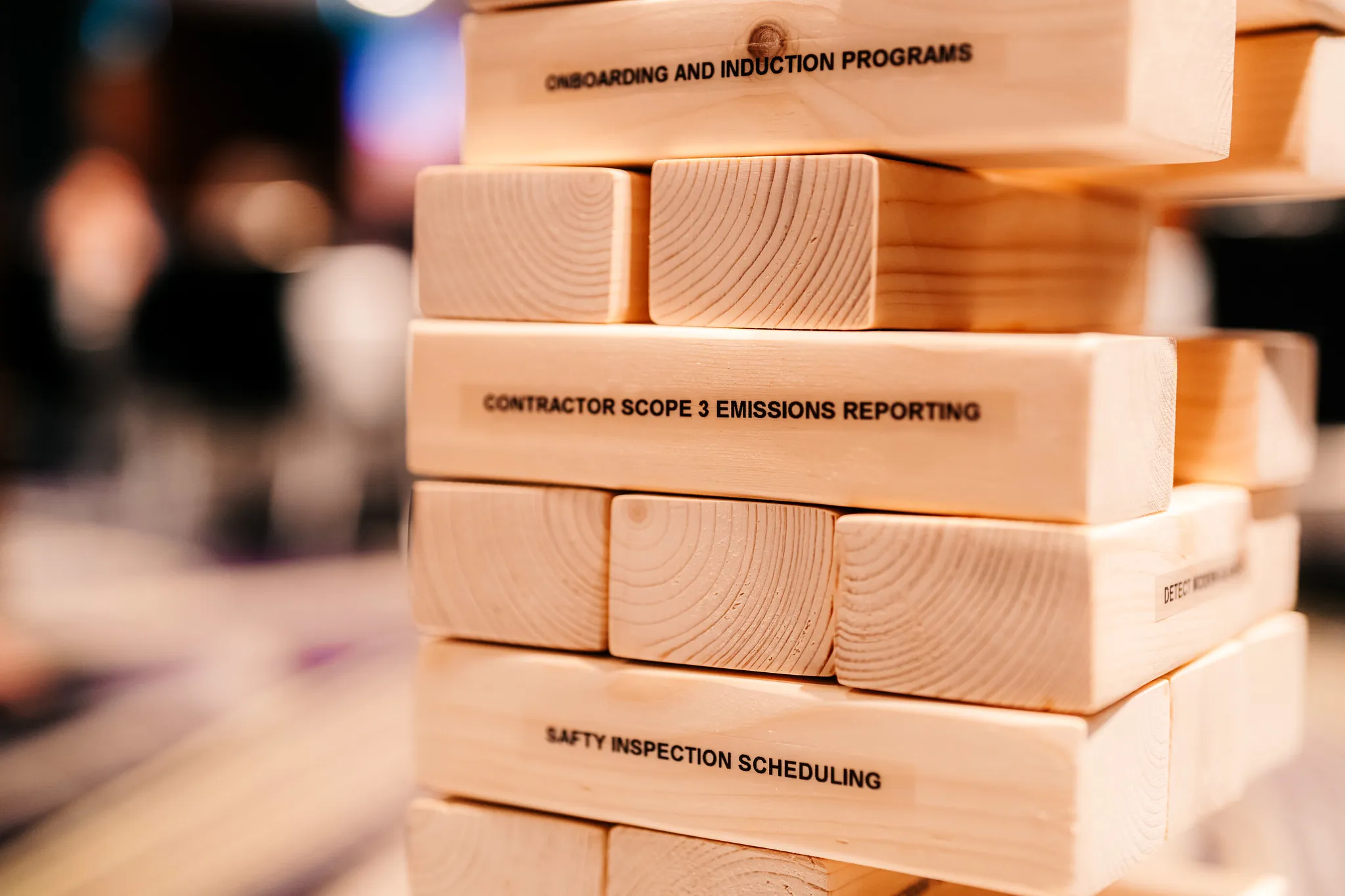
When the tower stands tall, it reflects a workplace where these obligations are met consistently. But when blocks are removed, whether through oversight, resource constraints, or siloed processes, the structure weakens.

This illustrates why most incidents aren’t caused by a single mistake. They emerge from systemic gaps, where multiple layers of protection fail to align.

What the Falling Tower Demonstrates

When the tower collapses, it’s not because one block was missing, it’s because the system couldn’t absorb the loss. In real workplaces, this might look like:

  • A contractor bypassing induction because the process wasn’t enforced
  • A fatigue policy ignored under time pressure
  • A hazard report lost in manual paperwork

Each gap compounds risk. Eventually, the holes line up, and an incident occurs.

This is why manual management of safety obligations is no longer viable. With hundreds of overlapping requirements and complex supply chains, businesses need systems that anticipate risk and maintain structural integrity.

Technology: The Invisible Reinforcement

If the tower represents your safety stack, technology is the invisible reinforcement that keeps it standing. Digital risk management platforms and AI-driven tools provide:

  • Real-time visibility into contractor compliance and workforce readiness
  • Automated alerts for gaps in training, fatigue management, or credential checks
  • Centralised data for audits and reporting, reducing administrative burden

These capabilities don’t just prevent blocks from being removed, but also strengthen the entire structure, making it resilient to change and complexity.

Smarter Safety: How AI and Ask Ava Reinforce Your Safety Stack

Artificial intelligence adds another layer of protection by turning data into actionable insight. Instead of waiting for the tower to fall, AI helps organisations anticipate weak points and reinforce them before failure occurs. This can include:

  • Predicting risks based on patterns and behaviours
  • Flagging systemic weaknesses before they lead to incidents
  • Supporting decision-making with evidence, not guesswork

Avetta’s Ask Ava brings these capabilities to life. It’s an intelligent assistant embedded in the Avetta One platform that helps organisations manage complexity and strengthen their safety systems in real time.

Here’s how Ask Ava helps:

  • Identifies gaps instantly across contractor compliance, training, and credential checks
  • Provides real-time insights into risk exposure across your supply chain
  • Automates routine tasks, reducing manual effort and human error
  • Delivers proactive alerts, so you can act before issues escalate

In short, Ask Ava transforms safety from reactive to proactive. It gives you confidence that every “block” in your safety stack is supported — not by guesswork, but by data-driven intelligence.

The Systemic Nature of Safety

The Jenga metaphor underscores a critical shift in thinking: health and safety is systemic, not individual. Blaming a worker for an error ignores the context that shaped their decision, such as time pressure, unclear procedures, or conflicting priorities.

Modern safety management focuses on patterns, processes, and systems. It asks:

  • Were rules workable and consistently reinforced?
  • Did the environment create conditions for error?
  • Were tools and resources available to support safe decisions?

This approach moves organisations from a culture of blame to a culture of learning, where every gap is an opportunity to strengthen the stack.

Key Takeaways

Jenga may seem like a simple game, but its lesson is profound: health and safety depends on the strength of the whole, not the perfection of the parts.

  • Safety is interconnected: One missing element can destabilise the entire system.
  • Manual processes aren’t enough: Complexity demands automation and integration.
  • AI and technology are essential: They provide visibility, predict risk, and enable proactive action.
  • Focus on systems, not individuals: Most failures are systemic, not personal.

In workplace safety, stability isn’t an accident, it’s engineered. To keep your tower standing, invest in systems that anticipate risk, technology that reinforces compliance, and a culture that learns rather than blames.

quote icon
sweepstake tag icon
Health and safety
Risk management
Health and safety
Bringing Health & Safety to Life: What Jenga Can Teach Us About Risk

Discover how Jenga explains the systemic nature of workplace safety, and why AI tools like Ask Ava keep your safety stack standing strong.

time icon
min read
quote icon
,

Health and safety isn’t a checklist, it’s a system. Every compliance or risk management factor is like a block in the Jenga tower. Removing or ignoring one (e.g., skipping a safety audit, or accepting expired training) might not cause immediate collapse — but it weakens the system. Here’s how you can use technology and AI to keep it standing.

Workplace health and safety is often discussed in terms of compliance checklists and regulatory frameworks. But what if we could visualise the complexity of safety systems in a way that makes their fragility — and their interdependence — impossible to ignore?

Imagine a game of Jenga. Each block represents a critical element of your safety stack: fatigue management, contractor verification, hazard reporting, worker visibility.

Together, these blocks form a stable structure. Remove one, and the entire tower begins to wobble. Remove a few more, and it collapses.

This simple metaphor captures a profound truth: health and safety is about interconnected systems rather than isolated actions.

The Metaphor Behind the Blocks

Every block in the tower symbolises a real-world EHS obligation and its associated risk. For example:

  • Fatigue management -> a safeguard against impaired judgment.
  • Contractor verification -> a barrier against introducing unqualified personnel into high-risk environments.

When the tower stands tall, it reflects a workplace where these obligations are met consistently. But when blocks are removed, whether through oversight, resource constraints, or siloed processes, the structure weakens.

This illustrates why most incidents aren’t caused by a single mistake. They emerge from systemic gaps, where multiple layers of protection fail to align.

What the Falling Tower Demonstrates

When the tower collapses, it’s not because one block was missing, it’s because the system couldn’t absorb the loss. In real workplaces, this might look like:

  • A contractor bypassing induction because the process wasn’t enforced
  • A fatigue policy ignored under time pressure
  • A hazard report lost in manual paperwork

Each gap compounds risk. Eventually, the holes line up, and an incident occurs.

This is why manual management of safety obligations is no longer viable. With hundreds of overlapping requirements and complex supply chains, businesses need systems that anticipate risk and maintain structural integrity.

Technology: The Invisible Reinforcement

If the tower represents your safety stack, technology is the invisible reinforcement that keeps it standing. Digital risk management platforms and AI-driven tools provide:

  • Real-time visibility into contractor compliance and workforce readiness
  • Automated alerts for gaps in training, fatigue management, or credential checks
  • Centralised data for audits and reporting, reducing administrative burden

These capabilities don’t just prevent blocks from being removed, but also strengthen the entire structure, making it resilient to change and complexity.

Smarter Safety: How AI and Ask Ava Reinforce Your Safety Stack

Artificial intelligence adds another layer of protection by turning data into actionable insight. Instead of waiting for the tower to fall, AI helps organisations anticipate weak points and reinforce them before failure occurs. This can include:

  • Predicting risks based on patterns and behaviours
  • Flagging systemic weaknesses before they lead to incidents
  • Supporting decision-making with evidence, not guesswork

Avetta’s Ask Ava brings these capabilities to life. It’s an intelligent assistant embedded in the Avetta One platform that helps organisations manage complexity and strengthen their safety systems in real time.

Here’s how Ask Ava helps:

  • Identifies gaps instantly across contractor compliance, training, and credential checks
  • Provides real-time insights into risk exposure across your supply chain
  • Automates routine tasks, reducing manual effort and human error
  • Delivers proactive alerts, so you can act before issues escalate

In short, Ask Ava transforms safety from reactive to proactive. It gives you confidence that every “block” in your safety stack is supported — not by guesswork, but by data-driven intelligence.

The Systemic Nature of Safety

The Jenga metaphor underscores a critical shift in thinking: health and safety is systemic, not individual. Blaming a worker for an error ignores the context that shaped their decision, such as time pressure, unclear procedures, or conflicting priorities.

Modern safety management focuses on patterns, processes, and systems. It asks:

  • Were rules workable and consistently reinforced?
  • Did the environment create conditions for error?
  • Were tools and resources available to support safe decisions?

This approach moves organisations from a culture of blame to a culture of learning, where every gap is an opportunity to strengthen the stack.

Key Takeaways

Jenga may seem like a simple game, but its lesson is profound: health and safety depends on the strength of the whole, not the perfection of the parts.

  • Safety is interconnected: One missing element can destabilise the entire system.
  • Manual processes aren’t enough: Complexity demands automation and integration.
  • AI and technology are essential: They provide visibility, predict risk, and enable proactive action.
  • Focus on systems, not individuals: Most failures are systemic, not personal.

In workplace safety, stability isn’t an accident, it’s engineered. To keep your tower standing, invest in systems that anticipate risk, technology that reinforces compliance, and a culture that learns rather than blames.

sweepstake tag icon
Health and safety
Risk management
Health and safety
Bringing Health & Safety to Life: What Jenga Can Teach Us About Risk

Discover how Jenga explains the systemic nature of workplace safety, and why AI tools like Ask Ava keep your safety stack standing strong.

Access this on-demand, anytime, anywhere
time icon
min read
Watch now
Player button
Health and safety
Bringing Health & Safety to Life: What Jenga Can Teach Us About Risk

Discover how Jenga explains the systemic nature of workplace safety, and why AI tools like Ask Ava keep your safety stack standing strong.

Speakers

time icon
min read
No items found.

Health and safety isn’t a checklist, it’s a system. Every compliance or risk management factor is like a block in the Jenga tower. Removing or ignoring one (e.g., skipping a safety audit, or accepting expired training) might not cause immediate collapse — but it weakens the system. Here’s how you can use technology and AI to keep it standing.

Workplace health and safety is often discussed in terms of compliance checklists and regulatory frameworks. But what if we could visualise the complexity of safety systems in a way that makes their fragility — and their interdependence — impossible to ignore?

Imagine a game of Jenga. Each block represents a critical element of your safety stack: fatigue management, contractor verification, hazard reporting, worker visibility.

Together, these blocks form a stable structure. Remove one, and the entire tower begins to wobble. Remove a few more, and it collapses.

This simple metaphor captures a profound truth: health and safety is about interconnected systems rather than isolated actions.

The Metaphor Behind the Blocks

Every block in the tower symbolises a real-world EHS obligation and its associated risk. For example:

  • Fatigue management -> a safeguard against impaired judgment.
  • Contractor verification -> a barrier against introducing unqualified personnel into high-risk environments.

When the tower stands tall, it reflects a workplace where these obligations are met consistently. But when blocks are removed, whether through oversight, resource constraints, or siloed processes, the structure weakens.

This illustrates why most incidents aren’t caused by a single mistake. They emerge from systemic gaps, where multiple layers of protection fail to align.

What the Falling Tower Demonstrates

When the tower collapses, it’s not because one block was missing, it’s because the system couldn’t absorb the loss. In real workplaces, this might look like:

  • A contractor bypassing induction because the process wasn’t enforced
  • A fatigue policy ignored under time pressure
  • A hazard report lost in manual paperwork

Each gap compounds risk. Eventually, the holes line up, and an incident occurs.

This is why manual management of safety obligations is no longer viable. With hundreds of overlapping requirements and complex supply chains, businesses need systems that anticipate risk and maintain structural integrity.

Technology: The Invisible Reinforcement

If the tower represents your safety stack, technology is the invisible reinforcement that keeps it standing. Digital risk management platforms and AI-driven tools provide:

  • Real-time visibility into contractor compliance and workforce readiness
  • Automated alerts for gaps in training, fatigue management, or credential checks
  • Centralised data for audits and reporting, reducing administrative burden

These capabilities don’t just prevent blocks from being removed, but also strengthen the entire structure, making it resilient to change and complexity.

Smarter Safety: How AI and Ask Ava Reinforce Your Safety Stack

Artificial intelligence adds another layer of protection by turning data into actionable insight. Instead of waiting for the tower to fall, AI helps organisations anticipate weak points and reinforce them before failure occurs. This can include:

  • Predicting risks based on patterns and behaviours
  • Flagging systemic weaknesses before they lead to incidents
  • Supporting decision-making with evidence, not guesswork

Avetta’s Ask Ava brings these capabilities to life. It’s an intelligent assistant embedded in the Avetta One platform that helps organisations manage complexity and strengthen their safety systems in real time.

Here’s how Ask Ava helps:

  • Identifies gaps instantly across contractor compliance, training, and credential checks
  • Provides real-time insights into risk exposure across your supply chain
  • Automates routine tasks, reducing manual effort and human error
  • Delivers proactive alerts, so you can act before issues escalate

In short, Ask Ava transforms safety from reactive to proactive. It gives you confidence that every “block” in your safety stack is supported — not by guesswork, but by data-driven intelligence.

The Systemic Nature of Safety

The Jenga metaphor underscores a critical shift in thinking: health and safety is systemic, not individual. Blaming a worker for an error ignores the context that shaped their decision, such as time pressure, unclear procedures, or conflicting priorities.

Modern safety management focuses on patterns, processes, and systems. It asks:

  • Were rules workable and consistently reinforced?
  • Did the environment create conditions for error?
  • Were tools and resources available to support safe decisions?

This approach moves organisations from a culture of blame to a culture of learning, where every gap is an opportunity to strengthen the stack.

Key Takeaways

Jenga may seem like a simple game, but its lesson is profound: health and safety depends on the strength of the whole, not the perfection of the parts.

  • Safety is interconnected: One missing element can destabilise the entire system.
  • Manual processes aren’t enough: Complexity demands automation and integration.
  • AI and technology are essential: They provide visibility, predict risk, and enable proactive action.
  • Focus on systems, not individuals: Most failures are systemic, not personal.

In workplace safety, stability isn’t an accident, it’s engineered. To keep your tower standing, invest in systems that anticipate risk, technology that reinforces compliance, and a culture that learns rather than blames.

quote icon
,

Speakers

No items found.
sweepstake tag icon
Health and safety
Risk management
Health and safety

Bringing Health & Safety to Life: What Jenga Can Teach Us About Risk

B. Gain Real-Time Visibility into Worksite Readiness

Discover how Jenga explains the systemic nature of workplace safety, and why AI tools like Ask Ava keep your safety stack standing strong.

Download this resource now
Get the safety audit brief
time icon
min read
Health and safety
Bringing Health & Safety to Life: What Jenga Can Teach Us About Risk

Discover how Jenga explains the systemic nature of workplace safety, and why AI tools like Ask Ava keep your safety stack standing strong.

time icon
min read
quote icon
,

Health and safety isn’t a checklist, it’s a system. Every compliance or risk management factor is like a block in the Jenga tower. Removing or ignoring one (e.g., skipping a safety audit, or accepting expired training) might not cause immediate collapse — but it weakens the system. Here’s how you can use technology and AI to keep it standing.

Workplace health and safety is often discussed in terms of compliance checklists and regulatory frameworks. But what if we could visualise the complexity of safety systems in a way that makes their fragility — and their interdependence — impossible to ignore?

Imagine a game of Jenga. Each block represents a critical element of your safety stack: fatigue management, contractor verification, hazard reporting, worker visibility.

Together, these blocks form a stable structure. Remove one, and the entire tower begins to wobble. Remove a few more, and it collapses.

This simple metaphor captures a profound truth: health and safety is about interconnected systems rather than isolated actions.

The Metaphor Behind the Blocks

Every block in the tower symbolises a real-world EHS obligation and its associated risk. For example:

  • Fatigue management -> a safeguard against impaired judgment.
  • Contractor verification -> a barrier against introducing unqualified personnel into high-risk environments.

When the tower stands tall, it reflects a workplace where these obligations are met consistently. But when blocks are removed, whether through oversight, resource constraints, or siloed processes, the structure weakens.

This illustrates why most incidents aren’t caused by a single mistake. They emerge from systemic gaps, where multiple layers of protection fail to align.

What the Falling Tower Demonstrates

When the tower collapses, it’s not because one block was missing, it’s because the system couldn’t absorb the loss. In real workplaces, this might look like:

  • A contractor bypassing induction because the process wasn’t enforced
  • A fatigue policy ignored under time pressure
  • A hazard report lost in manual paperwork

Each gap compounds risk. Eventually, the holes line up, and an incident occurs.

This is why manual management of safety obligations is no longer viable. With hundreds of overlapping requirements and complex supply chains, businesses need systems that anticipate risk and maintain structural integrity.

Technology: The Invisible Reinforcement

If the tower represents your safety stack, technology is the invisible reinforcement that keeps it standing. Digital risk management platforms and AI-driven tools provide:

  • Real-time visibility into contractor compliance and workforce readiness
  • Automated alerts for gaps in training, fatigue management, or credential checks
  • Centralised data for audits and reporting, reducing administrative burden

These capabilities don’t just prevent blocks from being removed, but also strengthen the entire structure, making it resilient to change and complexity.

Smarter Safety: How AI and Ask Ava Reinforce Your Safety Stack

Artificial intelligence adds another layer of protection by turning data into actionable insight. Instead of waiting for the tower to fall, AI helps organisations anticipate weak points and reinforce them before failure occurs. This can include:

  • Predicting risks based on patterns and behaviours
  • Flagging systemic weaknesses before they lead to incidents
  • Supporting decision-making with evidence, not guesswork

Avetta’s Ask Ava brings these capabilities to life. It’s an intelligent assistant embedded in the Avetta One platform that helps organisations manage complexity and strengthen their safety systems in real time.

Here’s how Ask Ava helps:

  • Identifies gaps instantly across contractor compliance, training, and credential checks
  • Provides real-time insights into risk exposure across your supply chain
  • Automates routine tasks, reducing manual effort and human error
  • Delivers proactive alerts, so you can act before issues escalate

In short, Ask Ava transforms safety from reactive to proactive. It gives you confidence that every “block” in your safety stack is supported — not by guesswork, but by data-driven intelligence.

The Systemic Nature of Safety

The Jenga metaphor underscores a critical shift in thinking: health and safety is systemic, not individual. Blaming a worker for an error ignores the context that shaped their decision, such as time pressure, unclear procedures, or conflicting priorities.

Modern safety management focuses on patterns, processes, and systems. It asks:

  • Were rules workable and consistently reinforced?
  • Did the environment create conditions for error?
  • Were tools and resources available to support safe decisions?

This approach moves organisations from a culture of blame to a culture of learning, where every gap is an opportunity to strengthen the stack.

Key Takeaways

Jenga may seem like a simple game, but its lesson is profound: health and safety depends on the strength of the whole, not the perfection of the parts.

  • Safety is interconnected: One missing element can destabilise the entire system.
  • Manual processes aren’t enough: Complexity demands automation and integration.
  • AI and technology are essential: They provide visibility, predict risk, and enable proactive action.
  • Focus on systems, not individuals: Most failures are systemic, not personal.

In workplace safety, stability isn’t an accident, it’s engineered. To keep your tower standing, invest in systems that anticipate risk, technology that reinforces compliance, and a culture that learns rather than blames.

Download now
Download now
Download now
Download now
sweepstake tag icon
Health and safety
Risk management
ways to get started

You've made it this far. Why not take the next step?

An award-winning platform. Loved by customers.