


By: Principal Health & Safety Scott DeBow & Vice President of Strategic Analytics Cheryl Wiebe, Avetta
The COVID-19 pandemic caused significant economic disruption and chaos across multiple industry sectors in the US. The measures implemented to contain the spread of the virus, such as lockdowns and travel restrictions, led to a sharp decline in consumer demand, supply chain disruptions, and increased costs. This resulted in significant revenue losses and supply chain disruptions for many companies. Furthermore, the pandemic created uncertainty and volatility in financial markets, leading to increased risk, lower investor confidence, and an extreme impact on economic activity in terms of Gross Domestic Product (GDP) as highlighted below in Figure 1. The pandemic also highlighted the importance of risk management and supply chain resilience in the face of unprecedented disruption.
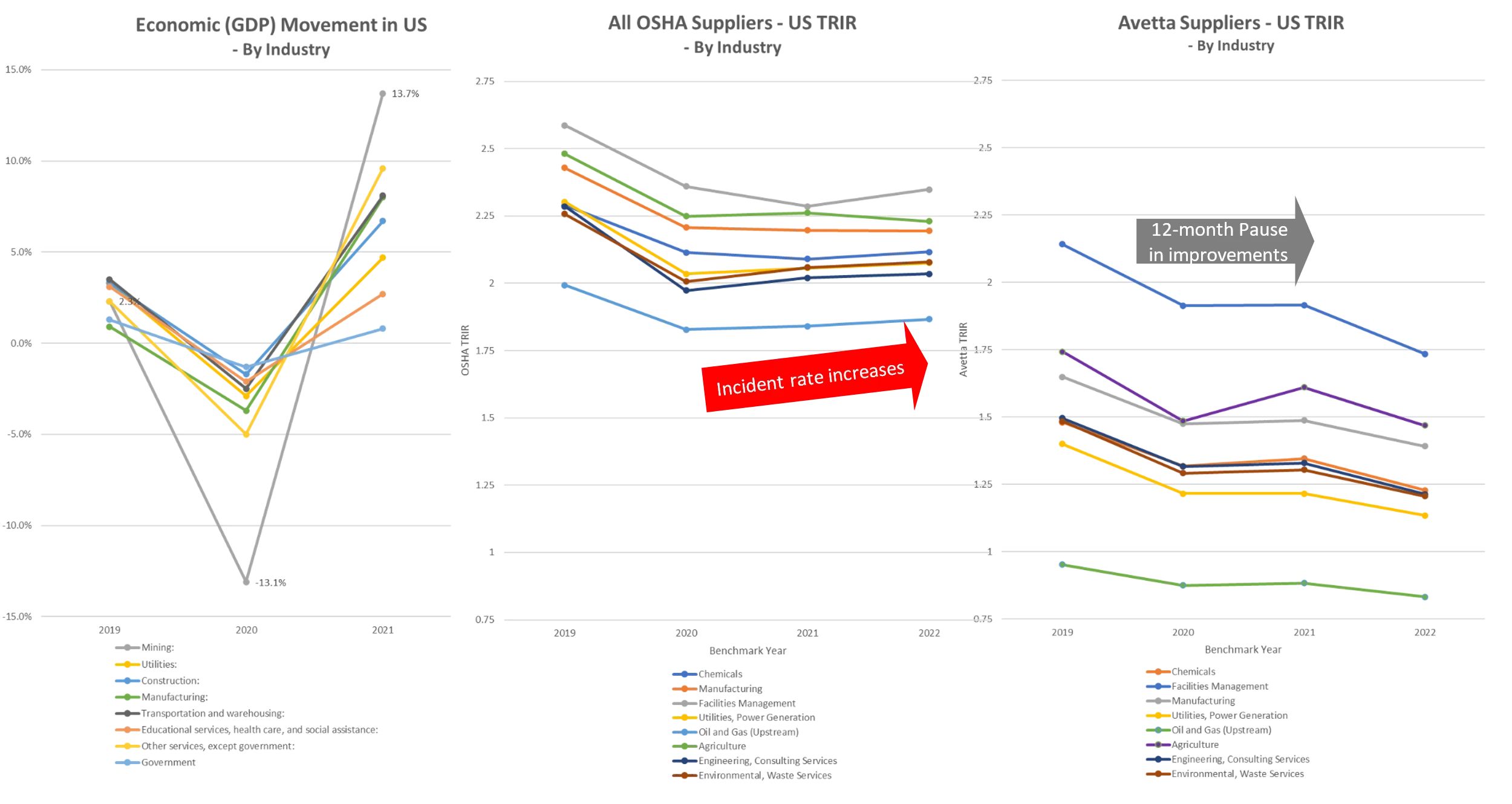
Before the shock of 2020, supply chains had been getting safer, and suppliers and contractors had been reducing safety-related incidents, as shown in the decline in safety incident rates in 2019-2020, both for suppliers, as reported by OSHA, and for Avetta-managed suppliers (see Figure 2).
While suppliers within the Avetta Network also experienced the pandemic’s effects. Avetta suppliers in some industries reversed their trend of improvements—notably Agriculture—which temporarily experienced an increase in incident rates in the 12 months following the pandemic. But on the whole, these effects were briefer, as the incident rates resumed a downward trend after 2021 (see Figure 2 below).
Is supplier economic health a leading indicator?
Lining up the two Figure 1 charts by year illustrates the decline in economic performance from 2020,which perhaps drove the disruption of continuous improvement previously seen in the US.
The economic disruption and decline experienced in 2020 had a measurable impact on
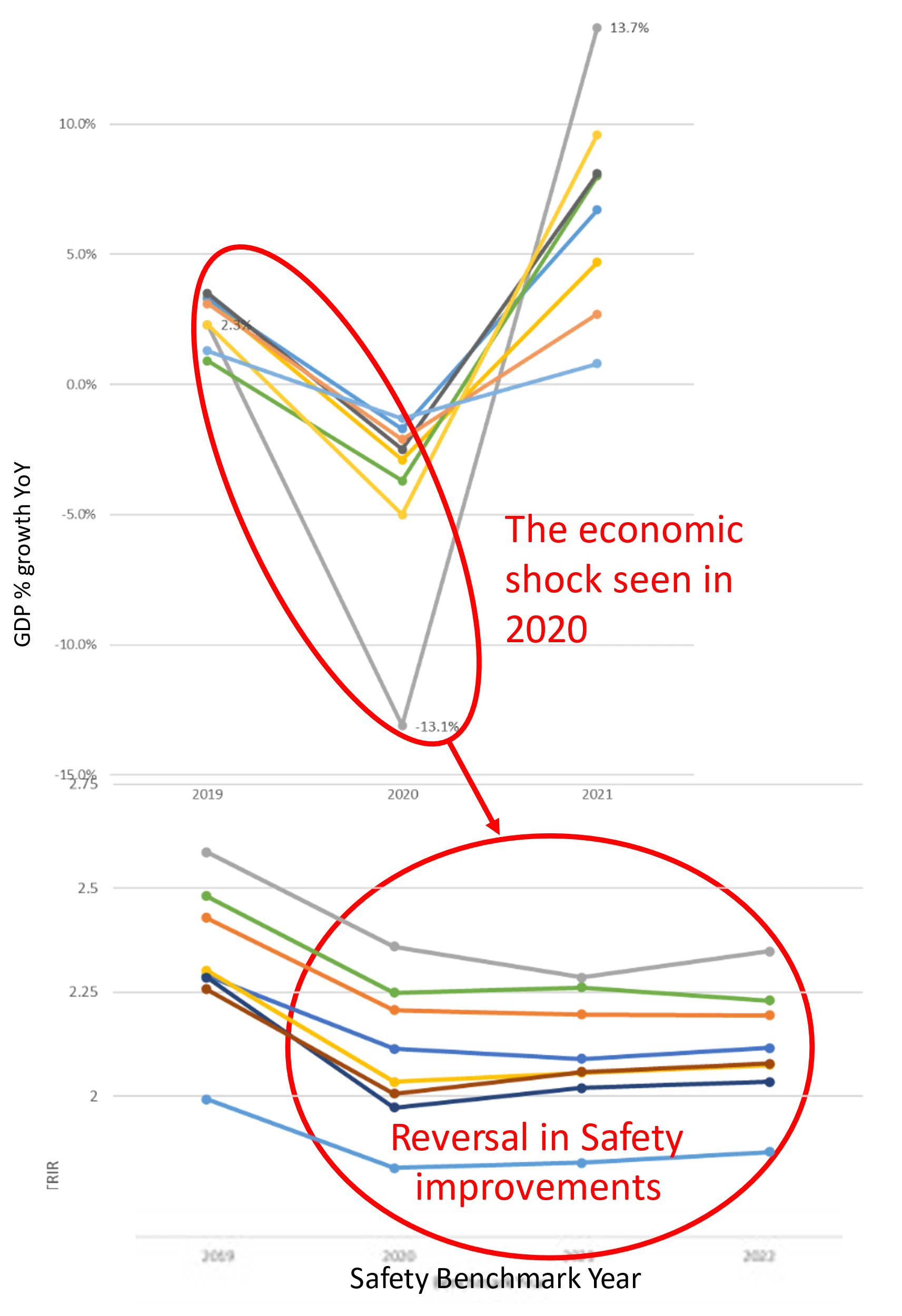
The economic disruption and decline experienced in 2020 had a measurable impact on suppliers’ ability to support the safety behaviors that were leading to a continuous decline in safety incident rates. You can see this impact in 2020-21, as the trend reverses. Figure 3: Graphic comparison of economic vs safety metrics
The pandemic led to disruptions in supply chains, increased costs, and reduced capacity. The resulting economic pressures made it even more challenging for suppliers to maintain the necessary safety standards and protocols. A shortage of critical supplies made it difficult for suppliers to provide adequate safety equipment and training to workers. In some cases, the pandemic forced suppliers to cut corners, compromising safety standards to maintain profitability or even solvency.
Organizations also took on new initiatives to stay in business, like producing masks, hand sanitizers, and other new products. Production lines would be regularly re-engineered to meet distancing protocols as well as to achieve the new purposes. These changes in processes, and products, coupled with new pressures, introduced new risks.
Harvard Business Review studied the effects felt by companies who were struggling to meet financial expectations. Similar to the analysis above, these public companies experienced impacts on their safety record:

